


The Marriages of Convenience of Personality-Driven Parties
Monday, April 13, 2026
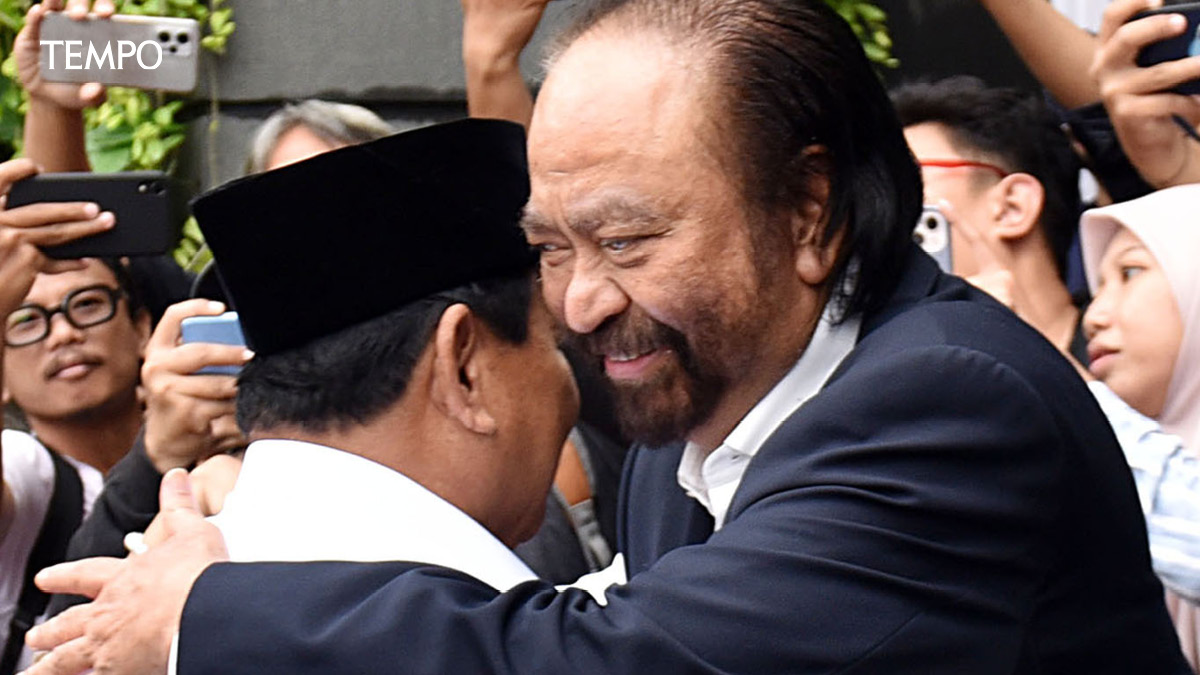
Word of the Gerindra Party merging with the NasDem Party spread after Prabowo Subianto met with Surya Paloh. Political parties are being used as a means for personal gain.
arsip tempo : 178046399259.
THIS is what happens when political parties rely on figures. They lack independence and neglect cadre development. Their futures are determined by the general chairpersons and their children. They become fragile and vulnerable to interference when the chairs’ prestige and influence wane.
That is what has happened to Surya Paloh and the National Democrat (NasDem) Party. As the founder of that party as well as its general chair, he and President Prabowo Subianto initiated a potential merger of the NasDem and the Gerindra Parties.
The idea for the merger emerged following a meeting between Surya and President Prabowo in Hambalang, Bogor, West Java, last March. Their initial discussion centered on a loan from Bank Negara Indonesia (BNI) for Surya’s company, which is developing Indonesia 1 Tower—a flagship project on Jalan M.H. Thamrin in Central Jakarta. Under the Prabowo administration, the disbursement of massive loans from members of the State-Owned Banks Association (Himbara) requires presidential approval.
Prabowo understands that the NasDem Party faces internal turmoil. Like running a family business, Surya has been grooming his son to be the next party general chair. NasDem Party cadres are against the plan, fearing it will further degrade the party’s reputation. This prompted Prabowo an offer: merging the NasDem and Gerindra parties. Another version of the story, it was Surya that came up with the merger idea.
Surya finds himself in a tight spot. Ever since the owner of the Media Group ended his political affiliation with Joko Widodo—because the NasDem Party backed Anies Baswedan’s unsuccessful campaign in the 2024 presidential election—his political prestige has dimmed. Despite supporting the Prabowo administration, he lacks access to power because no NasDem Party cadres sit on the cabinet.
Being outside the halls of power has left Surya’s businesses reeling. Pangansari Utama, his catering services firm, is currently at risk of being dropped as the provider for Freeport Indonesia—a contract it has held for three decades. His access to the leadership of MIND ID, the state-owned holding company that controls a majority stake in Freeport, has been severed. Meanwhile, Surya’s media and property businesses have also been struggling as well.
Amidst a decrease in logistical support, several key NasDem Party cadres—especially those who had previously served as regional government heads—have been approached by other parties, including the Indonesian Solidarity Party (PSI). They are offered positions as chairpersons of the party’s provincial and regional leadership boards. Their obvious goal is to boost the number of votes for that party led by Kaesang Pangarep, Jokowi’s youngest son, in the 2029 General Election. As former regional heads, they are believed to have a large base of voter support.
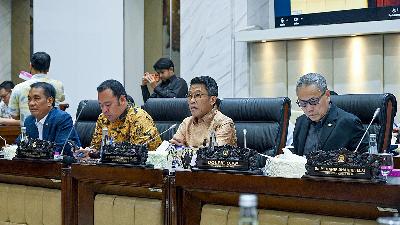
The NasDem Party’s weak bargaining position found itself listening to Prabowo’s desire to consolidate power. Although he has gathered numerous parties into a coalition in the House of Representatives (DPR), the NasDem Party’s inclusion could further strengthen the position of the Gerindra Party. Currently, only the NasDem Party and the Indonesian Democratic Party of Struggle (PDI-P) are effectively out of power.
What has happened with the NasDem Party is a common symptom among Indonesian political parties since the start of the reformasi era: parties becoming political vehicles for their founders. Parties tend to rely on public figures, lack ideology, lack a definitive platform, and lack institutional presence. Elites arbitrarily switch parties for fleeting interests, such as in the run-up to regional head elections.
Consider what happened to the Democrat Party. Wholly dependent on the figure of Susilo Bambang Yudhoyono, this party made a phenomenal debut in the 2004 General Election, winning 7.45 percent of the vote and 57 seats in the House of Representatives. The Democrats successfully propelled Yudhoyono to the presidency. Yudhoyono’s popularity as the incumbent led to their triumph in the legislative and presidential elections five years later. The Democrat’s reputation plummeted after Yudhoyono was no longer president.
Personally-run political parties easily become privatized: controlled by personal interests as if they were private property. When a downturn occurs, founders can propose a merger or offer up their party for acquisition by another party.
The personalistic parties are a dark chapter in post-Reformasi democracy. Instead of serving as public institutions that articulate the political aspirations of the people, these parties concentrate power in the hands of a few wealthy elites. The interests of the masses are only considered to garner votes during the five-yearly elections.